
A two sided nature
Views on nature from two Canadian giants


In my activities at the AGO, I often walk by the work of these two Canadian artists whose aesthetic is very recognizable and has become an essential part of the image Canadians have of their own country: Emily Carr and Lawren Harris.
Canada is mostly nature and the iconography of The Group of Seven (an artist group founded by Lawren Harris in 1920) really shaped this vision with its themes of rocks and trees, lakes and skies, and arctic monumentality. Emily Carr lived and worked on the other coast in British Columbia and her themes and visual vocabulary was greatly informed by her interaction with local Indigenous peoples.
Both artists were interested in the spiritual dimension of nature and I really enjoy their different take on this topic.
Lawren Harris developed a visual language that remained recognizable and semi abstract. Especially in his Arctic work, nature appears as a kind of monument which inspired awe in its dimensions and hostile beauty. Having spent a bit of time in the Arctic, I can understand the feeling that such paintings convey.
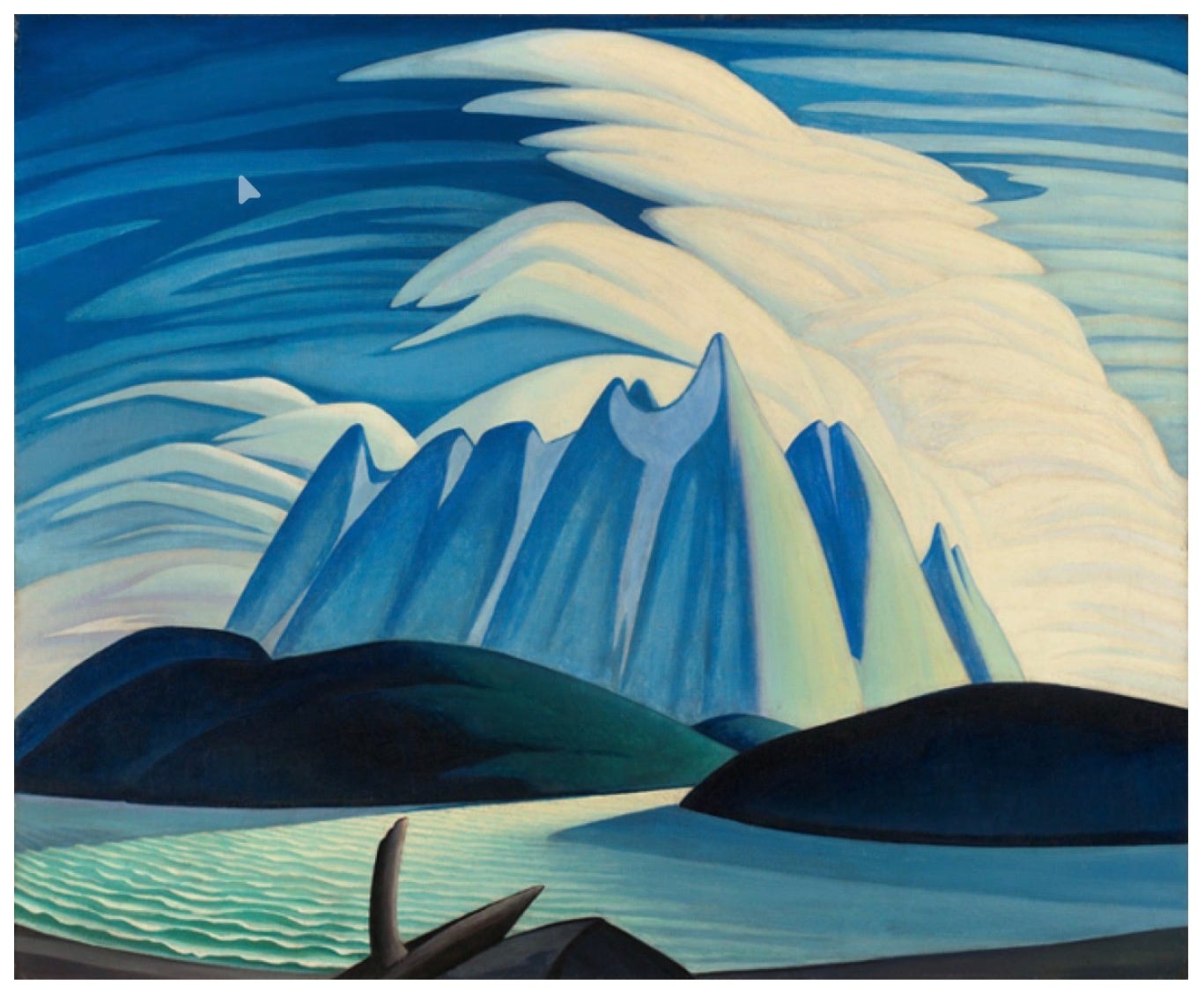
By polishing the shapes of his subject and carefully arranging his compositions, Harris talks about a spirit of nature which is contained in forms that are immovable, have been here forever and forever will remain. It’s nature on a scale much larger than human life, a nature whose beauty has a hard, impenetrable edge. A kind of spirituality that is cerebral or abstract in the sense of having to be imagined beyond the everyday.
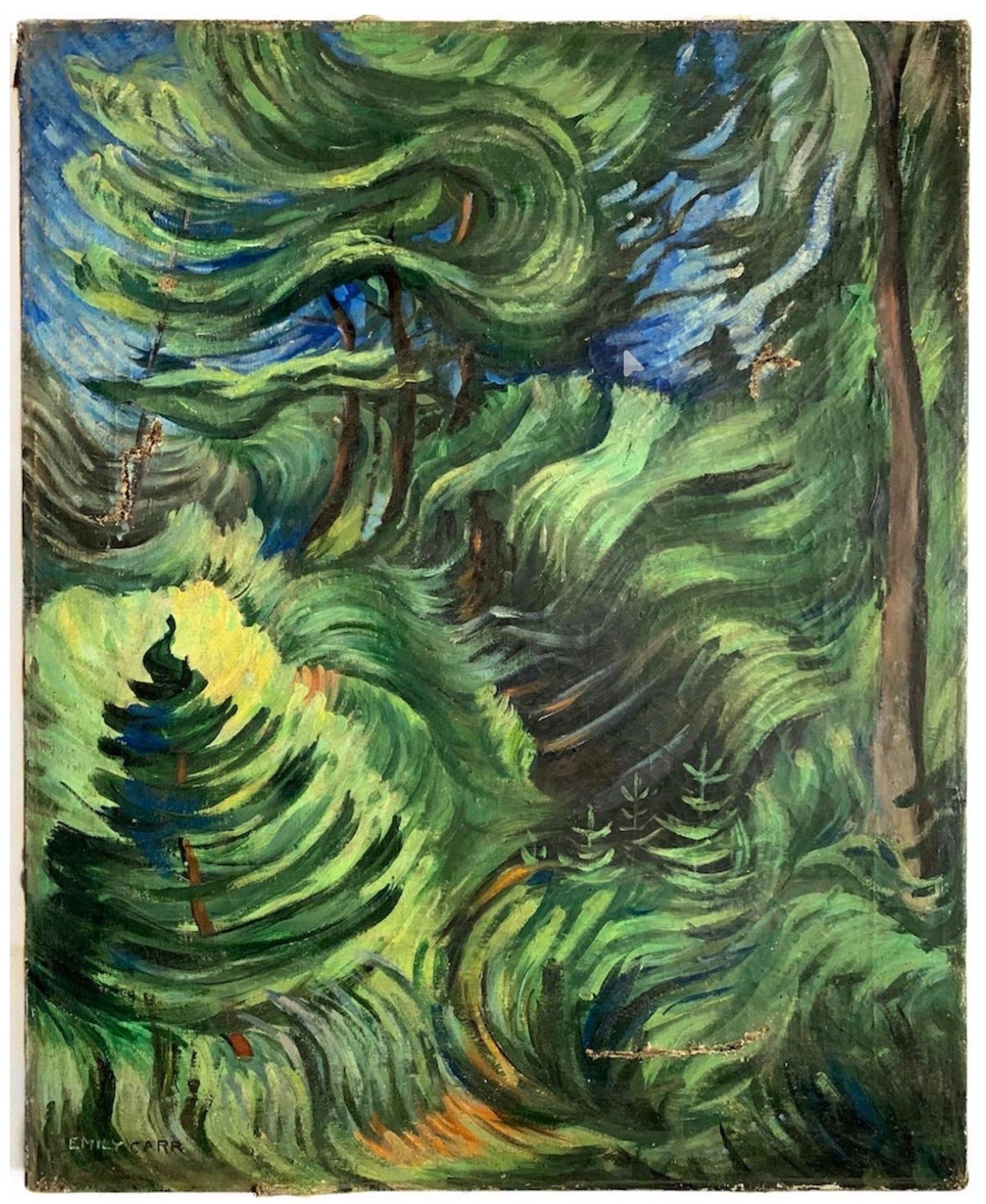
Emily Carr made work that was much more lively. Her depictions of forest are dynamic. Where Harris’ forms are carefully shaped and polished, Carr’s are rough and directional. Every time I walk by her painting, I can feel the wind ruffling the foliage. These images describe a nature that is pregnant with living spirits which can move you, trip you, play with you, on a human scale.
I really enjoy these very different impressions of nature.
Beautiful ethereal quality to both of these. They truly brought modern expressionism to Canada.