
Why Writing About Your Art Is So Much Harder Than Making It
My master class in writing an artist’s statement

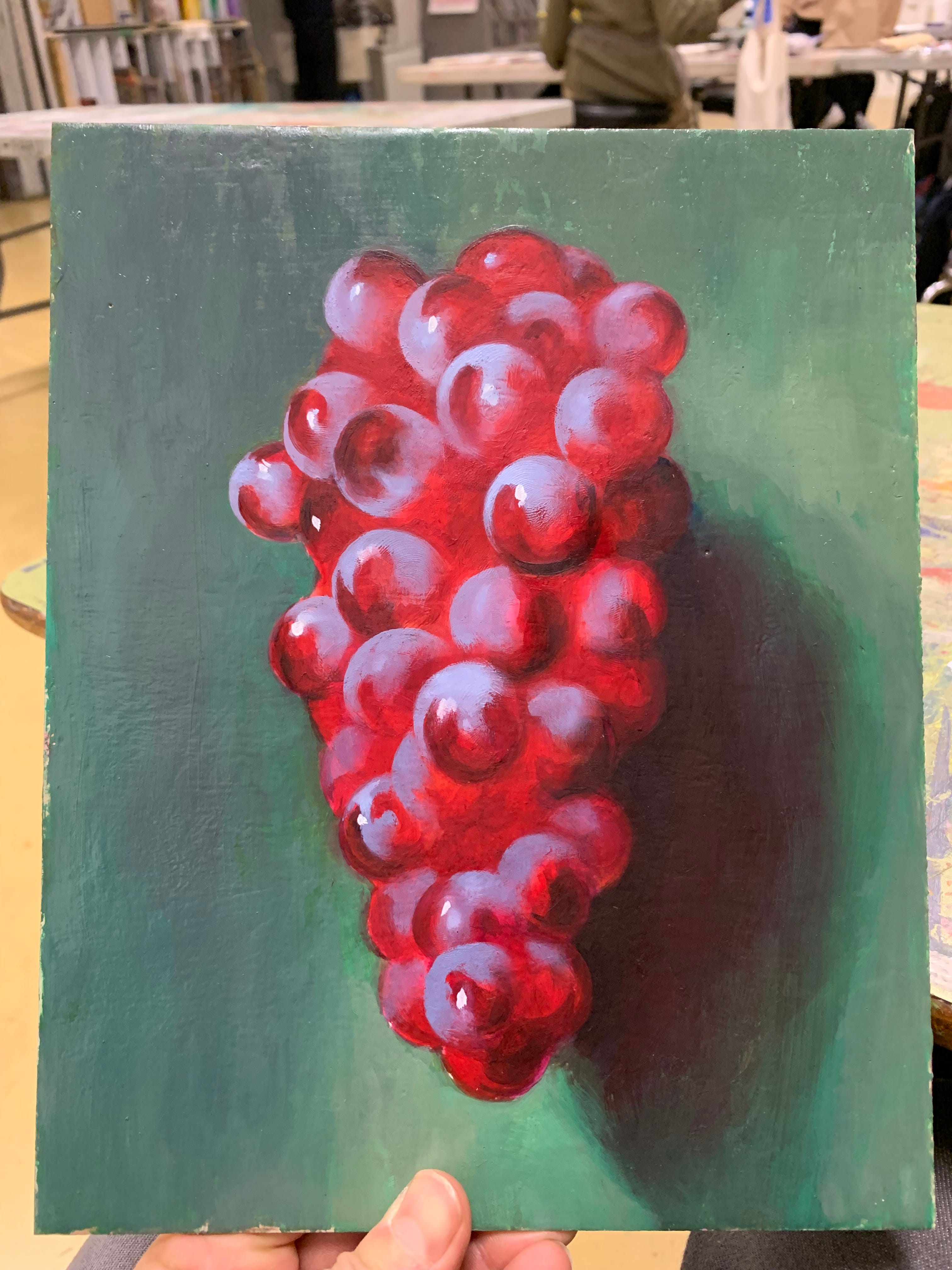
I am writing an application for a grant and this process always reminds me of the difficulty of describing visual artistic efforts using words. Check it out: “I want to build the visual framework for an artistic project that associates representations of the natural environment and the landscape of memory with the aim of describing a shifting relationship between place and identity.” Maybe you can tell me what this means because I don’t really know what it means. The challenge in applying to a grant is that you have to present a plan for what work you would do. How will you build on the work you have been doing and develop it further or add more nuance or even go into a new direction?
As an art teacher, I often see students struggling to write something called an artist statement. There is a constant expectation that they need to articulate their artwork into words and, as a result, these statements often arrive at two undesirable forms. The first outcome is a text that explains the presence and meaning of specific elements in the artwork - “this object was given to me by my grandma and I painted it blue because I am sad she died”. Painting is more than the sum of its parts and, explaining the choices made in this way, weakens the work, limiting what a viewer can read in the picture. This may be an effort to support a weak artwork. However, a good painting speaks for itself, in the sense that everything is included that I, as a viewer, am meant to know about the image in question. If this is the case, an explanatory text becomes a translation into words of formal choices that have already been articulated in paint. This cementing into words beats the viewer over the head with what they are supposed to “see” or “get” from the painting. The artwork becomes limited. It’s boring. And annoying. Better to write nothing at all.
The second undesirable form of artist statement is the academic sounding “word salad”. The art school student struggles to connect the experience of painting with the conceptual or cultural theory education that they are absorbing at the same time. This text is a vague enumeration of general concepts that the work “explores” or “investigates”. It is often difficult to connect this type of writing with painting, in particular. But, because of its ambiguity, this form does not imprison the artwork into a particular reading or meaning, so it is a lesser evil.
Generally, the advice given to artists struggling to describe their art is to write: what you are doing (or propose to do), why you’re doing it, and how you are going to do it. This formula can help balance a specific intent within a larger conceptual framework. This is not easy and the content of such a proposal would have to shift depending on the project or application. Is this something you have struggled with?
An artist statement is not meant to explain a particular artwork: it is not a legend for specific meaning. Think of it as an articulation of the lens through which the artist understands the world they live in. In this way, the artist statement focuses the viewer’s thinking on a particular direction from which they may encounter the work, without telling them what to see. We must be left free to bring our own associations to the work.
Let’s look at a working example
Artist Jenny Saville says: “I am not painting disgusting, big women. I’m painting women who’ve been made to think they are big and disgusting.” What does Jenny Saville paint? Big, fleshy bodies. Why? To articulate the experiences she has had as a woman feeling that her body does not conform to the surrounding standards of what an acceptable woman’s body is. How does she express this condition in paint? There are so many ways that she’s channeled these concepts into her sophisticated personal aesthetic language. Her figures are monumental in scale - maybe if somebody feels that they’re too big, instead of trying to become smaller, they make themselves even bigger, on the scale of giants. The paint is applied as flesh. She talks about applying thick, buttery paint to the parts of the body that are fat and cooler, and thin and washy in the parts of the body where the skin is thin and the warm blood is close to the surface. She described the experience of taking off her bra at the end of the day and noticing how it left an imprint on her body - in some of her early images, topographical lines are carved into the bodies depicted on the canvas. Her paintings often depict transitional bodies. As a result of physical trauma including accidents, plastic surgery, gender reassignment etc. This is to say that she feels that the physical body has to be forced by physical means to fit standards of beauty that are conceptual and cultural in nature.
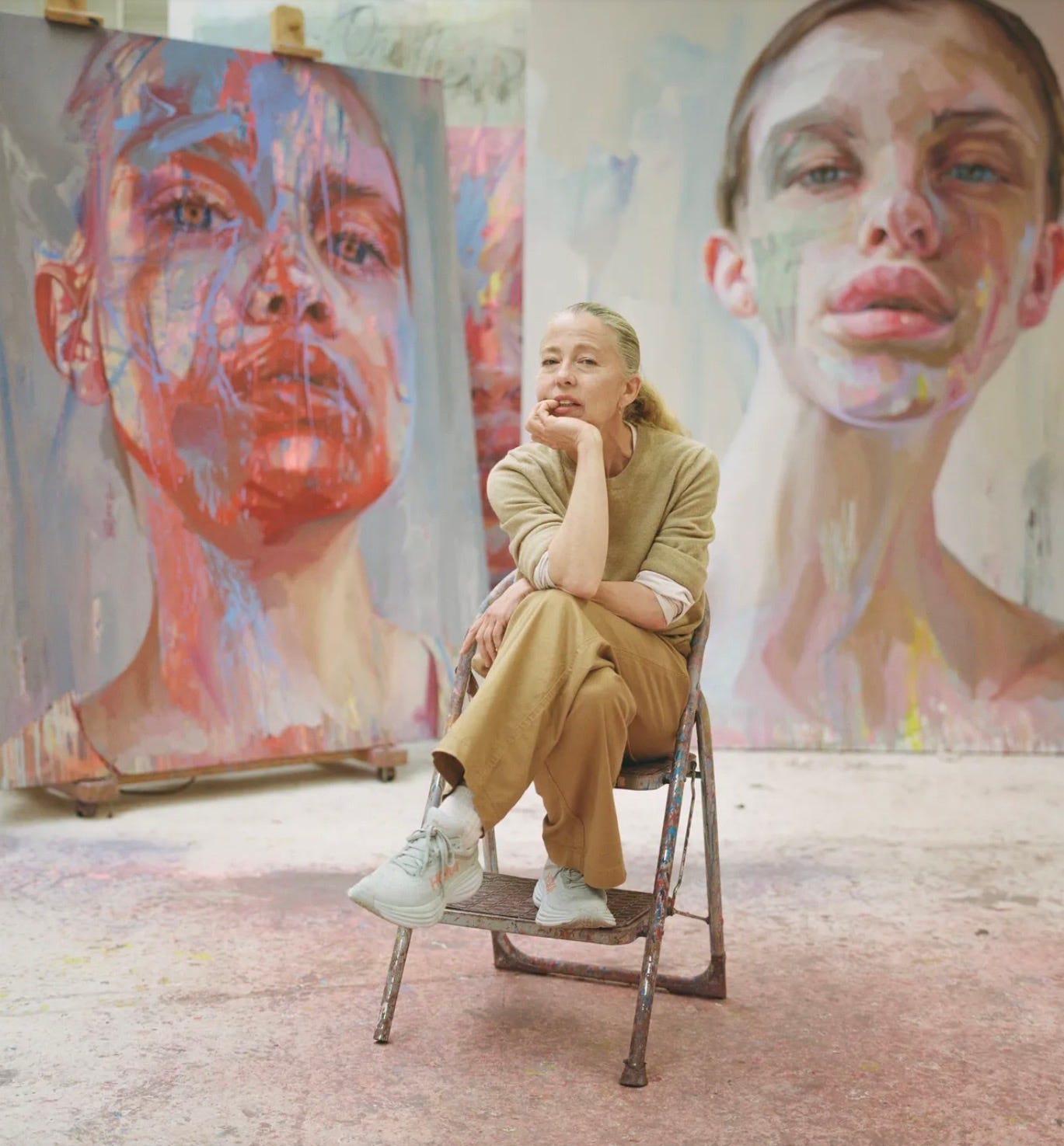
I hope you can see how we could build a pretty coherent artist statement from the writing above. To arrive at these notions and align them with techniques and personal visual strategies takes a long time and it would be unreasonable to expect an art school student to come up with something in this range. And yet, art students are expected to do this.
I have a hard time with this kind of writing myself, so I am going to use this opportunity to summarize my what/why/how right now.
My goal is to paint visions that have a dream-like, unstable quality. There are figures that don’t quite belong to their surroundings. Things appear to be on the verge of dissolution, much like a dream escapes articulation exactly as you try your best to remember it.
Why do I paint this type of imagery? I am interested in the kinds of experiences that interrupt the flow of daily life and suddenly generate feelings of wonder or awe. These things can be small: a friend saying or doing something out of character, a moment when nature shows up strangely or beautifully in the middle of the city, somebody doing something outlandish on the subway. They can also be large: the collapse of a government, the fall of the Iron Curtain, emigration. And everything in between. Your expectation of how the day will go is shaped by your hopes and goals as much as by your memories and past experiences. Something that interrupts the connection between expectation and memory is what I want my pictures to convey.
How does this become visual? I like to use non local colour, and to intermingle realistic and abstract elements in articulating figures that shift between these two aesthetics. These compositions are highly orchestrated from many photographic fragments since I am interested in the idea that more information produces more confusion and begins to undermine a coherent sense of unity or a whole. The outlines of figures and environments become intermingled and the figure ground relationship reversed.
Here is what ChatGPT thinks my introductory passage is about: “As for the meaning behind the original passage you quoted, I think it’s really about a visual exploration of how memory and identity shape, and are shaped by, the landscapes we encounter. The idea of “a shifting relationship between place and identity” could refer to how memories or experiences with a certain place (whether physical or emotional) change over time. It’s like how a memory of a place might shift as we grow, or how our connection to it might evolve, influencing how we understand ourselves.”
It has taken me quite a long time to write this post because I really tried to clarify my own thoughts on the motivations and meanings behind my work and I think I made some progress. What you think? Does this article resonate with your own writing efforts? Do you have advice for me?
Very helpful as I move from one medium to a new, as-yet-unexplored one.
Beautiful post—as always, Bogdan. It's not easy to articulate an artist's statement, we feel pushed into a corner all of a sudden. In such instances, it's better to focus on our key strengths and find the answer there, just as you do in this article. I believe there is a certain recursivity to our exploration, as if we are turning one more corner inside a tacit labyrinth whose paths we're meant cross. It's good to be able to voice such journeys and then move on with confidence. What's meant to be, is meant to be! Best.