

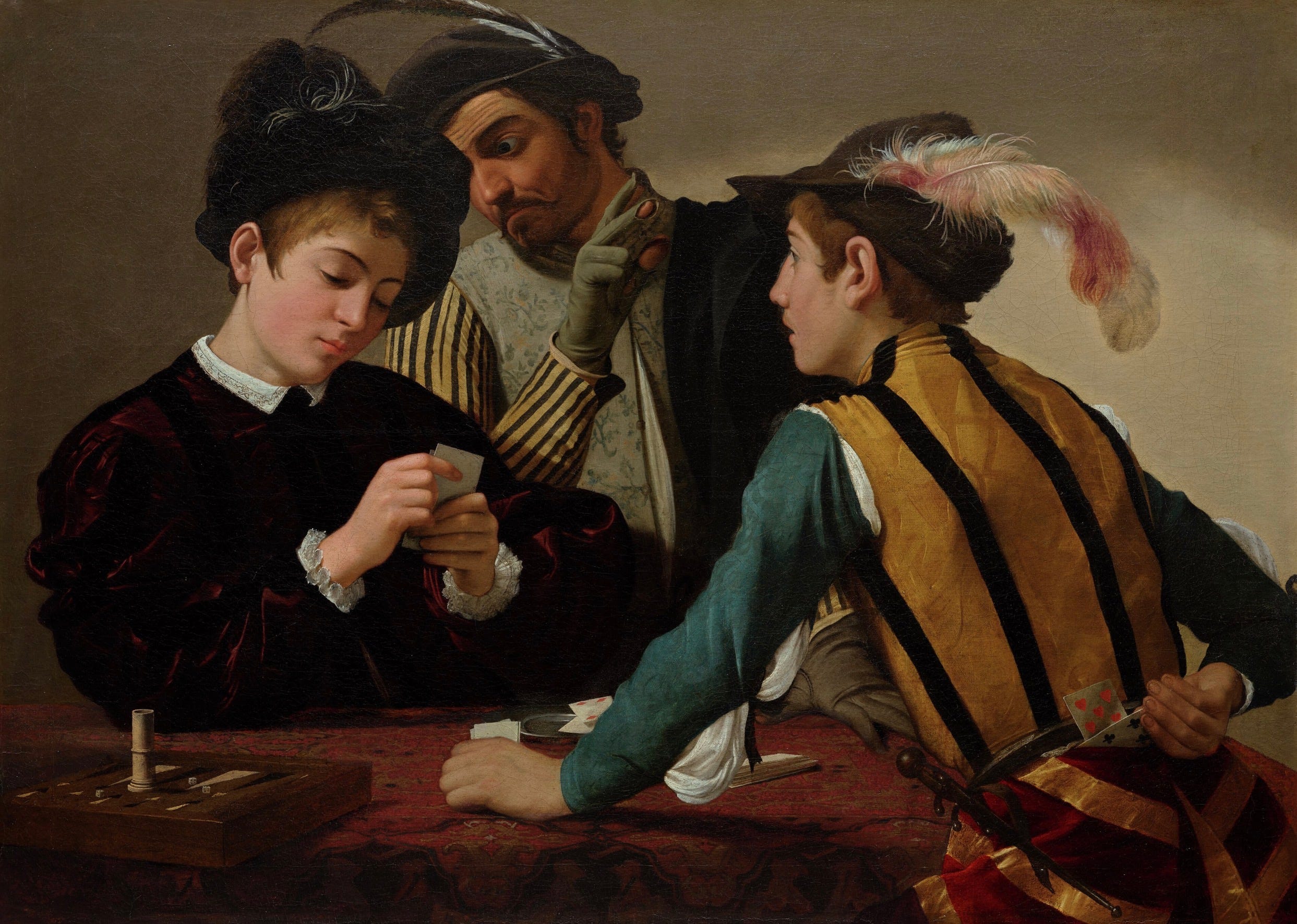
An absolutely marvellous picture! This painting is a feast for the eyes and a consummate example of how a story can be told through the abstract language of composition.
You can already sense what is going on here. The young man on the left is engaged in a game that he is destined to lose. Look at how his head is bent to the right, allowing his face and exposed neck to be illuminated. We see his face and it looks innocent and untested: he’s face value. We see the back of the other young man on the right and we are also allowed to know something that the first character is unaware of: the hidden cards. The first character is also unaware of the third man, who is peering at his cards from behind. We immediately feel like we’re in the same room. Witnessing. Waiting for the dénouement of this suspended drama.
Some of this story is told through the poses, the clothing, the expressions. The sharpness of their dress and the stripes make the two bad guys reminiscent of yellow jackets. The lighting conditions are carefully staged to cast shadows on the parts of the painting that are unknown to the guileless boy on the left. But the real narrative power of this image comes from the carefully choreographed structure of shapes and values. Having spent a long time making a careful drawing I discovered a lot about Caravaggio’s visual logic in arranging this scene. It is where his genius is beautifully revealed. Many visual analyses of paintings do not go beyond the interpretation of symbols and gestures within art historical parameters.
What interested me was something else entirely. Why does this image feel tense? How does our eye move around the picture in a way which seems pre determined? How can we use these same principles in our own paintings?
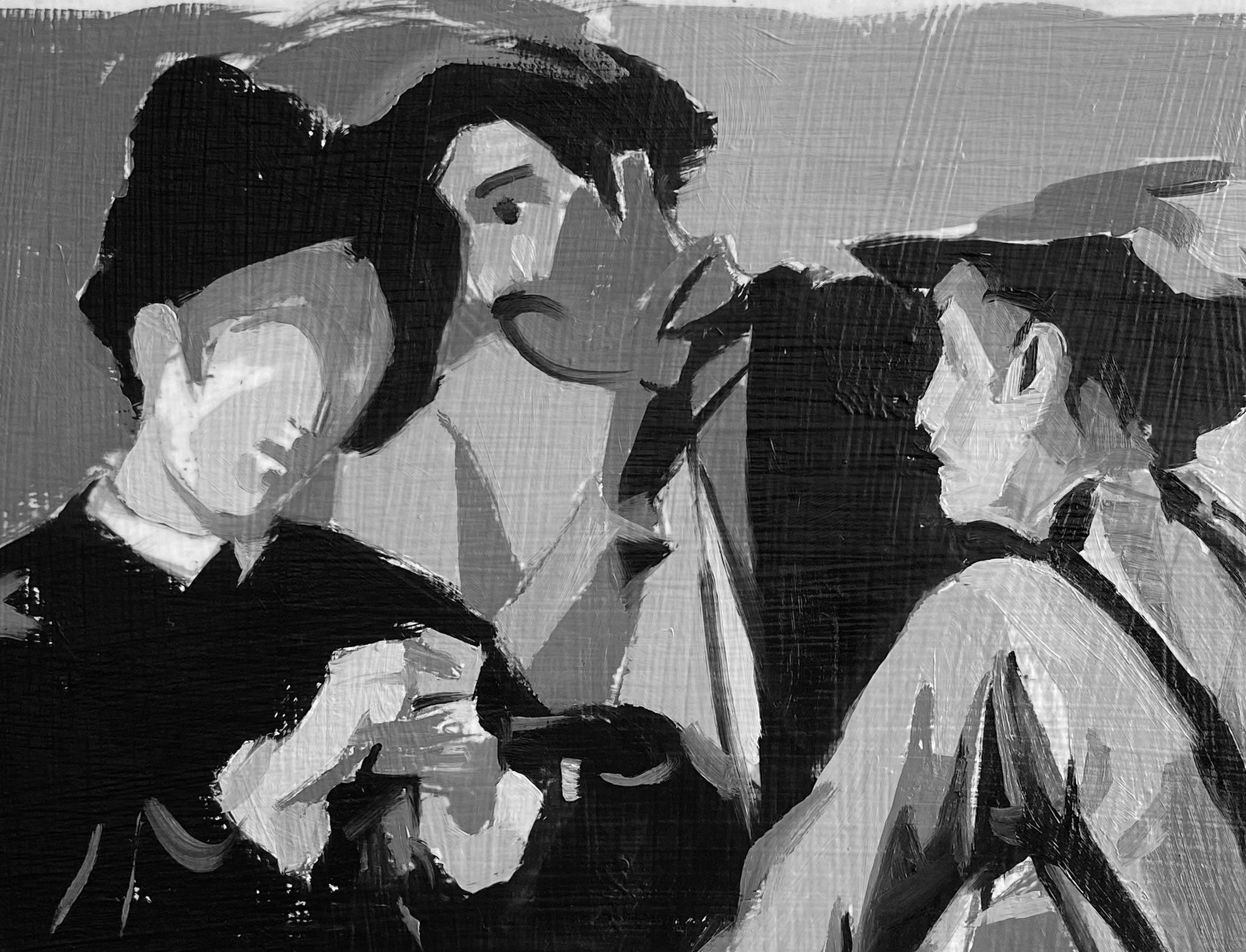
To answer these questions, I spent a long time studying this picture - drawing, simplifying, dissecting. In this week’s studio lesson, I will show you the value studies and compositional breakdowns I made while working through this painting. Together we will uncover how shapes and values direct our attention, create tension, reveal information, and guide us through a narrative without our even noticing it. These are not just observations about Caravaggio. They are practical tools that can be used in your own drawings and paintings.
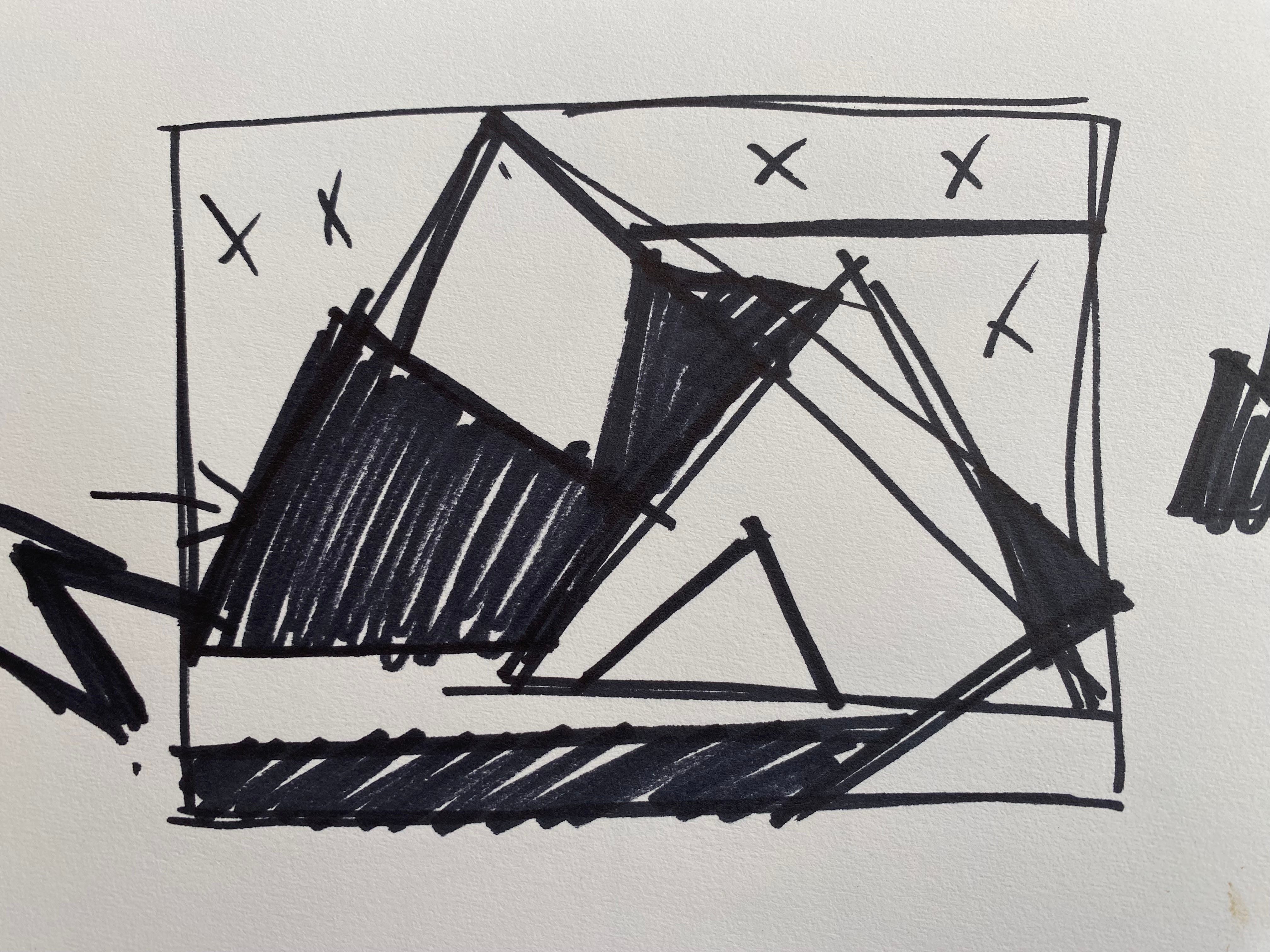
If you want a deeper understanding of how pictures work and what makes some images compelling beyond their content, then join me in this deep dive!
