
Critique the critique
An old post that still feels relevant

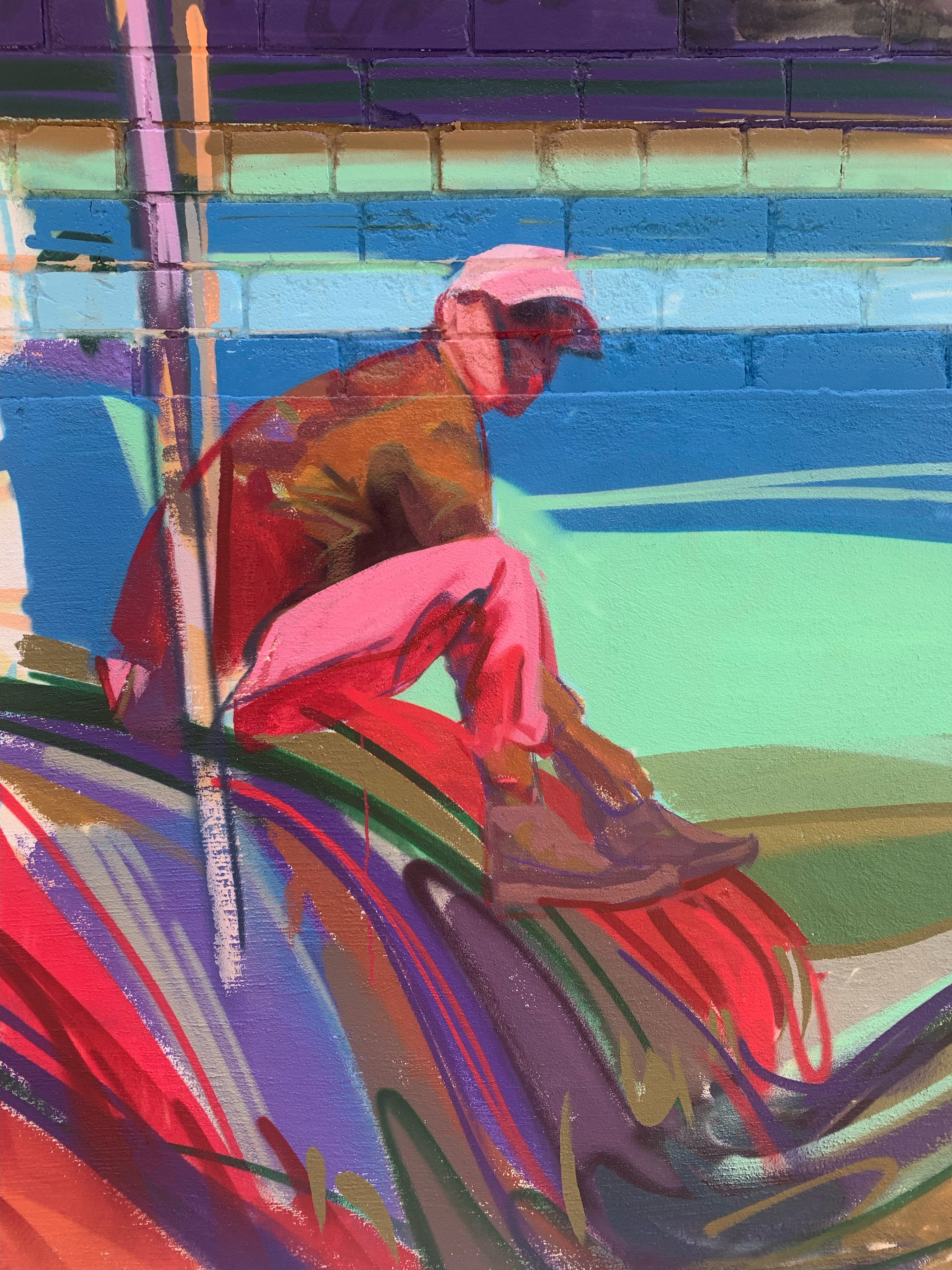
Critique is a big part of the art school experience. In fact it feels like it lays at the core of arts education. After more than a decade of teaching I realized that it’s just another form of inherited thinking and I stopped doing it because think that it’s ultimately not very useful.
When I was a student I really liked talking about art and discussing the ideas, intentions and decisions that lead my classmates to the artwork in question. At a more beginner level, the critique is about comparing results, seeing how people dealt with the same problem in their own different ways. I was one of the few who would always have something to say. When I became a teacher, I remained one of the few who talked.
There is a reality to talking about art that is beautifully expressed in this David Lynch meme:
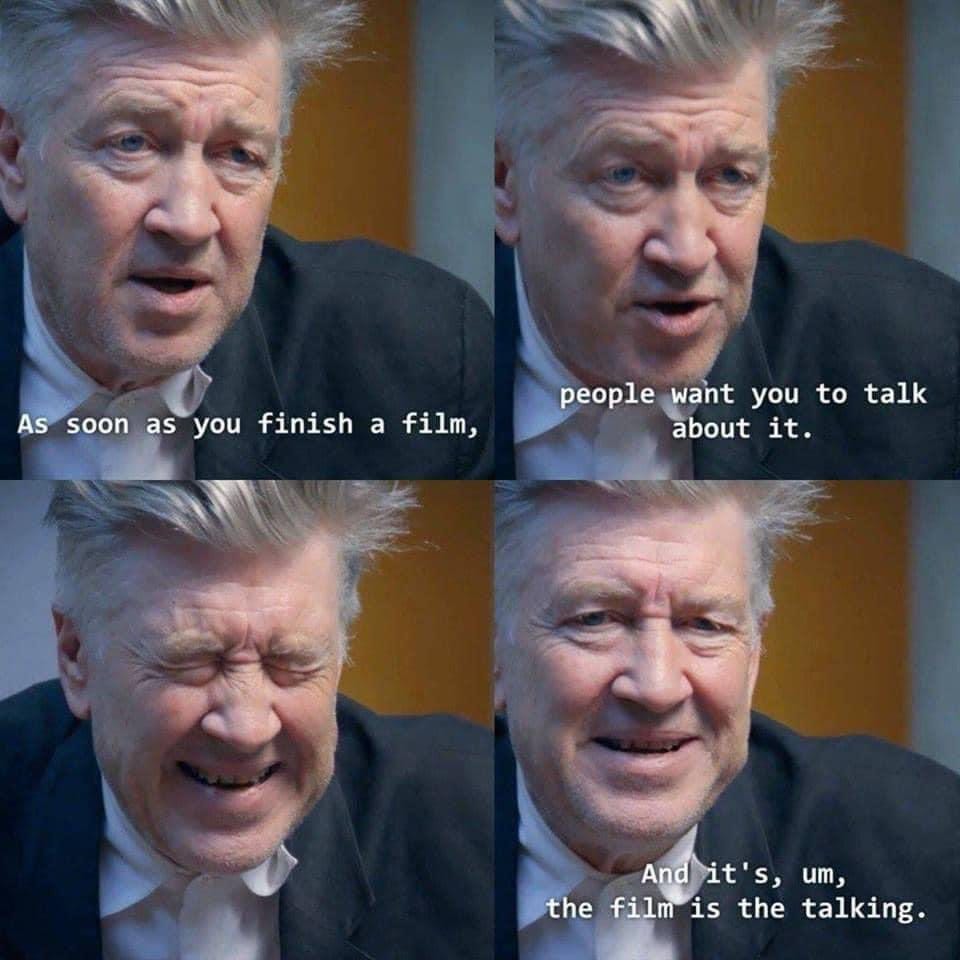
The art is the talking. If you could describe it in words then you could just do that. Or you could write about it. Critique, in its art school form, has this expectation of explanation. Explain what you did: why did you do it this way, what does that mean, what is is about. When I paint something I make decisions that have their own logic and which the work requires. Why I use a certain colour, create certain shapes or textures, has to do with the impulse I get during the process. It is often not a part of whatever initial plan I had, which is usually pretty minimal. So, it feels unfair to expect this of students who are often beginners to some extent. We need to just be happy that it worked out at all. Students are easily discouraged and hard on themselves. I used to try my best to do the sandwich method: a negative wrapped in two positive comments. I believe that discussing your work remains very important but not in a critique format. It should happen in an organic, ad hoc or a need basis. The best discussions, the most interesting ideas arise from talks in the hallway, talking with your studio mates. Students ask me sometimes to come see what they’re working on: another good way to do it.
The more critiques I did over the years and the more I talked about people’s artwork to myself, the more clear it became to me that this is about me. About me projecting my own vision and interpretation into my students work. I get very excited about painting and I start to make all kinds of connections and see interesting formal decisions and draw parallels to art history. But what is the purpose of this? I suppose it is something to say to fill the silent void.
Critique invites comparison and measurement: Mine is better, I am better. She did it better, mine is worse, I am no good. There is no correct way to do anything in art. There is only your way. We can learn some basic technical and formal skills, then it’s just a matter of doing it and finding your way. So there seems no point in doing these art school critiques. In fact, you should not even look at student work. Look at art that has been deemed great and see what you can learn from there. Art schools are garbage factories - very little is worth navel gazing about. And that is how it should be: art school is a place to just start, to make as many mistakes as possible and see what happens after.
I also stopped doing critiques because I feel less and less sure about what is good or not, whether a certain amount of effort went into the work. I believe that only the student knows this. I can have an opinion about whether I like it or not, but their own opinion of their work is ultimately more important. So I am more interested in how you see your own work, where do you wish you could take it and whether you think I can help you. During communism, if you made a mistake at work you had to go through a process of self-critique, where you had to confess your sins and promise to do better. I am going to format my art school critiques like that.
I'm also a teacher, and I have found more interesting to ask to students about what the were trying to accomplish, and what they think about the piece they are doing. So it's their own n talking, their own thinking and decisions. Thanks for sharing.
I think that critiques are important to help learn the language of art, and also to build a bit of resilience as an artist. I think critiques were especially important to me early on to help me learn about the choices and the power of my materials, and especially the basics of composition. In my own art school experience I found the critiques were more often compliment sessions rather than useful feedback. I did learn that everyone has a difference tolerance for criticism.