
Egg tempura

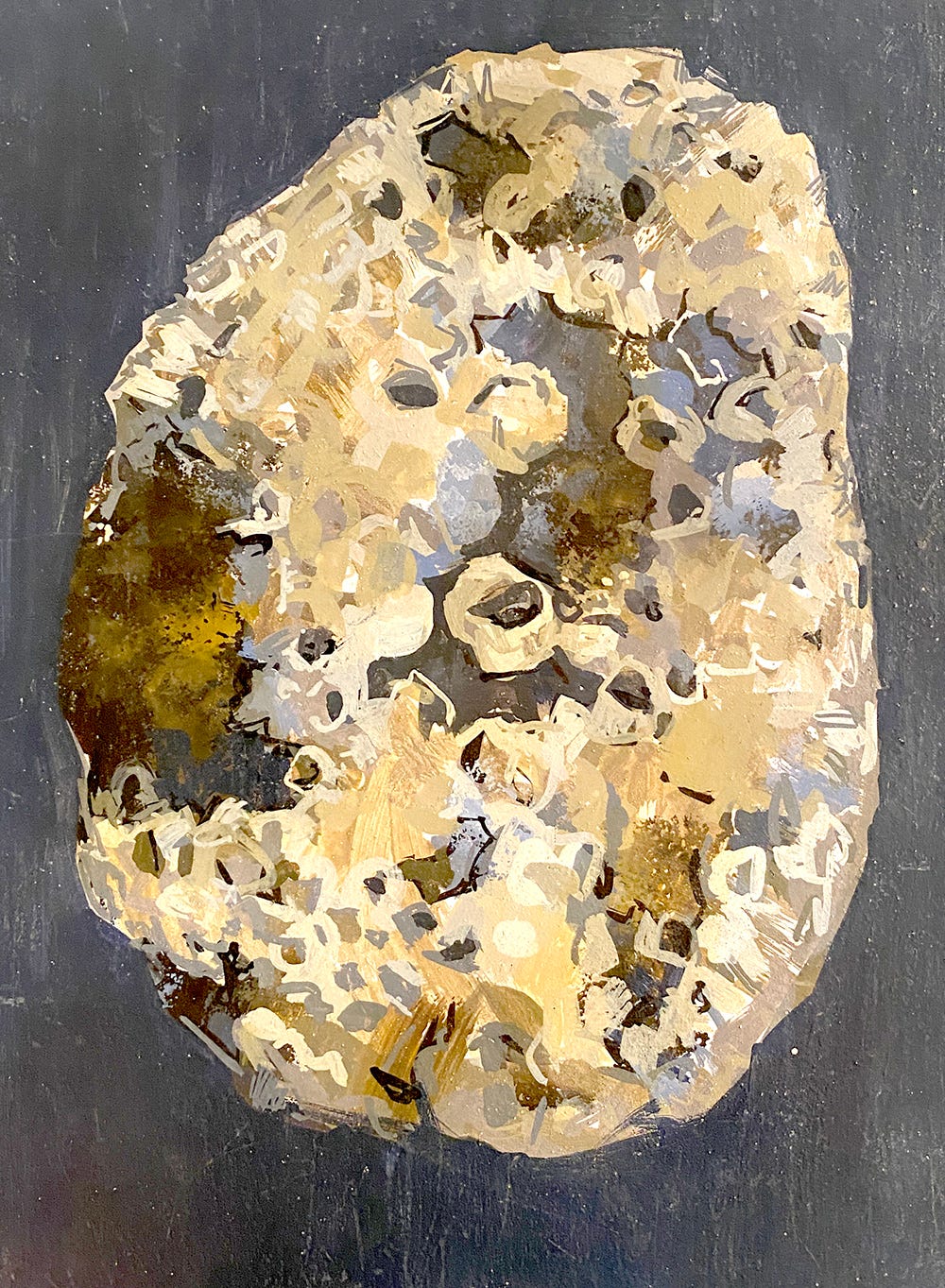
I wanted to tell you about egg tempera, the ancient way of painting. I teach this technique in a course that deals with a variety of historical painting media. Despite all my efforts, students inevitably start to refer to this old school technique as “tempura” - the Japanese deep fried food.
Tempera is a paint made from pigment mixed with egg yolk, the protein rich substance that acts as a binder. This paint was used extensively in the art of the European middle ages and early Renaissance. It was perfectly suited to painting on wooden panels and it was used to adorn many a church altar before painters transitioned to oil painting.
In his 1936 essay The Work of Art in the Age of Mechanical Reproduction, Walter Benjamin wrote about the concept of aura. This is the idea that an art work which is reproduced, no matter how faithfully, loses its aura of authenticity. There is something irreplaceable to the artwork as a unique object that was made in a specific time and place by human hands. And this is the element that could not be captured by the reproduction techniques of the 1930s. How quaint this seems in our era of AI assisted reproducibility. Do we even think about aura anymore? Or authenticity?
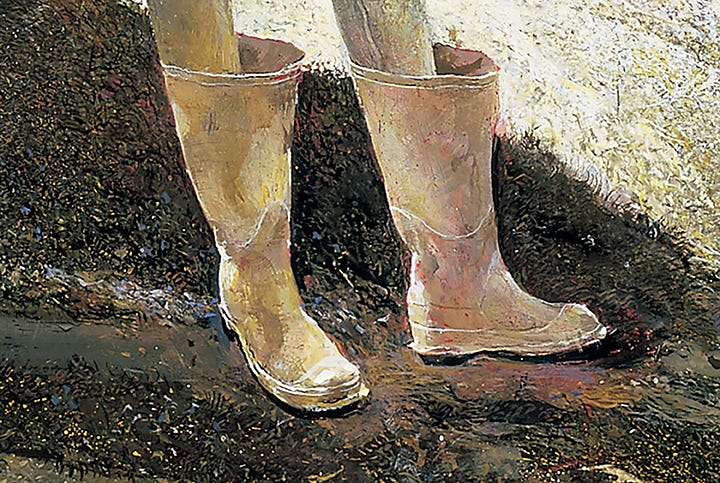
Anyway, if you care about aura, then egg tempera might be for you. It is just so old school, finicky, analog, and eminently material. You have to make your own paint as you go, by mixing the powdered form of the colours you’ll need with the yellow part of the egg. I made a demo for my students (above) and I really got absorbed in generating the interesting textures on a barnacle covered rock. This water based paint dries quickly to a permanent satin finish that is somewhat reminiscent of gouache or acrylic. It is hard to blend colours in this medium and a transition can be created by using a hatching or stippling technique, often with very thin brushes. This makes egg tempera much related to drawing, as you can build layers of lines in different colours (see below). You can turn your cell phone off, light up a candle and pretend you’re a medieval monk as you start mixing your paint. I really like objects and techniques that are old, as they tend to be very tactile, material and, on occasion, unnecessarily complicated. I do believe it is a chance to gain some insight into the nature of paint, its ingredients and their history.
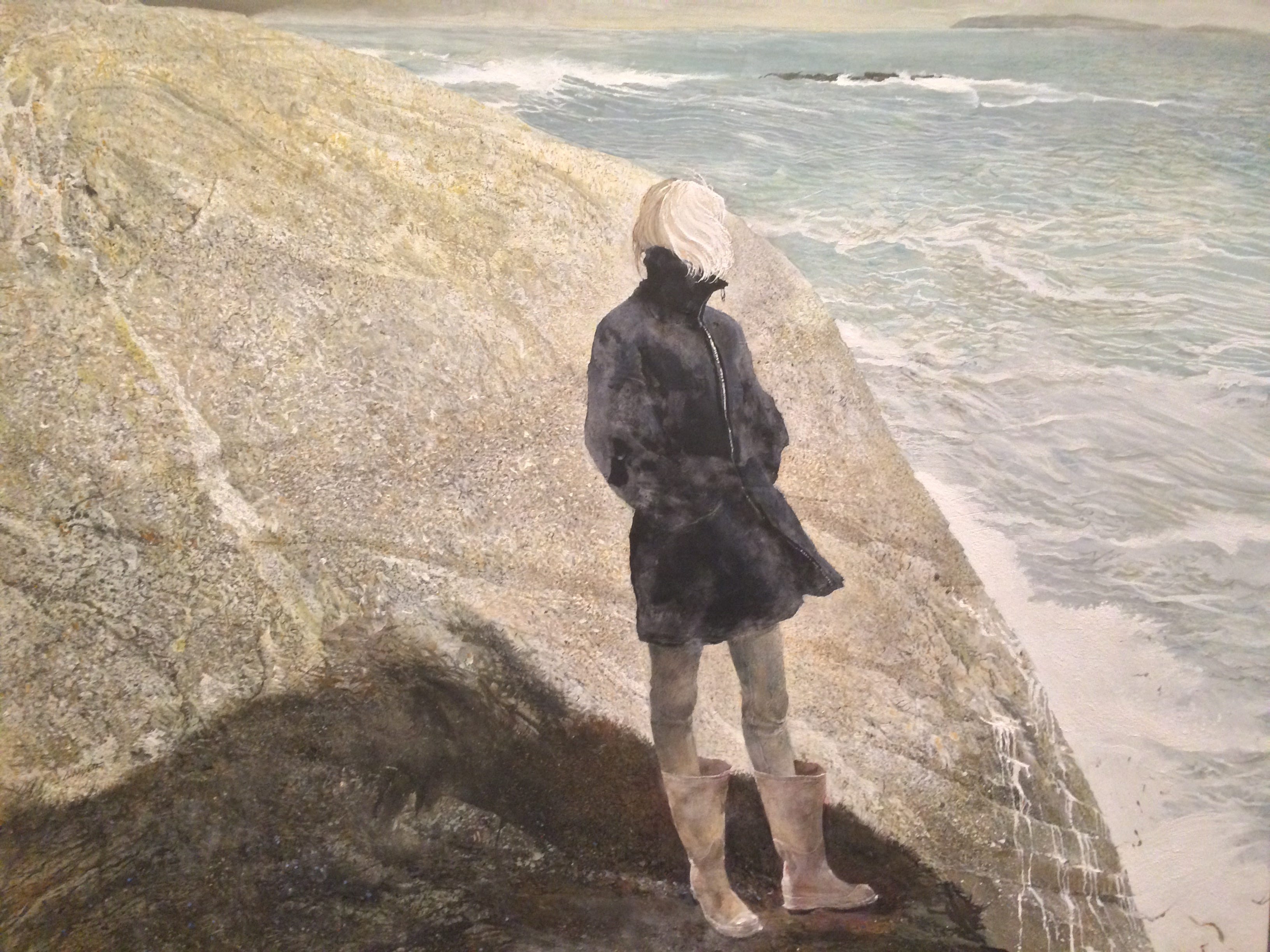
Egg tempera is not very widely used today. A notable example is Andrew Wyeth, a great watercolourist who also created moody and wonderfully textured tempera visions like this one. But he’s dead, so… I donno. Do people still use egg tempera? Have you ever tried it?
it’s beautiful! i would be curious to try this technique since i can’t use oils in my small space- is there info on how long the mixture lasts - or do you need to use it right away?
Love the colors in your painting!