
The Language of Composition
How Paintings Direct Attention

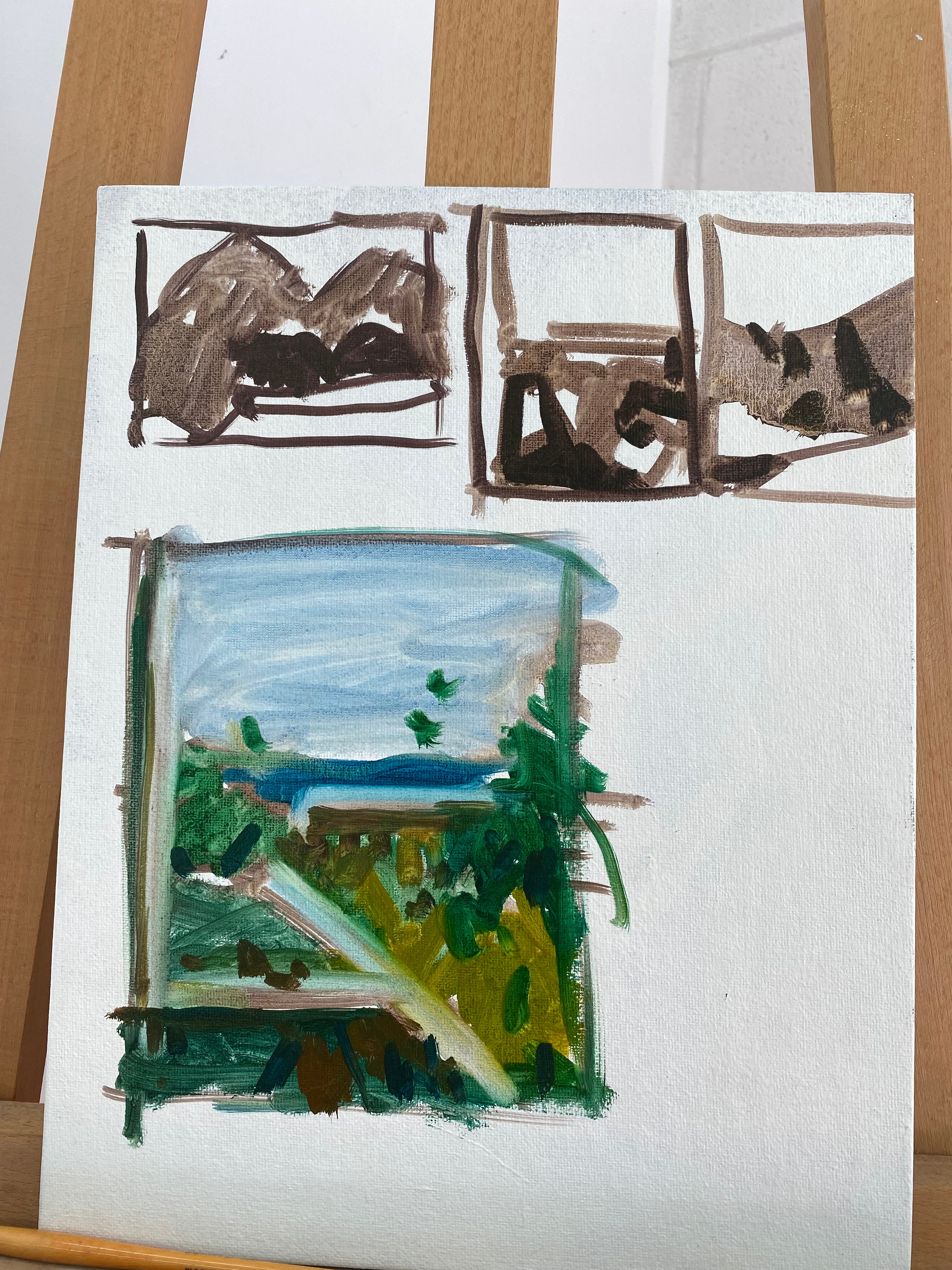
Students sometimes tell me that, in their experience, it is unusual for a teacher to demonstrate the process or techniques that they ask their class to apply. I find this shocking. Visual art is visual, not just in terms of examples but in the activity. By example and imitation is the best way to learn anything.
If you’ve taken a course with me you know that I am all about demos. This is how I learned and I believe that a demo is the essential bridge between a concept explained in words and how that concept can be expressed materially.
A couple weeks ago I ran my second painting intensive workshop, The Big Shapes that make the Painting Work.
We worked on what remains one of the big challenges in representational drawing or painting: simplification.
Simplification is a process of abstraction, meaning that you are taking something complex and reducing it to its essential coordinates. What are the most important aspects of your source imagery that you need to address?
This is also where paining moves beyond simple copying. Your source is not just instructions to follow, it is raw material that you need to shape. You will need to think about the shape of your canvas, which may be different from your photos. You need to think about the orientation and also about the large relationships within the rectangle. Here, there are many things you can do to emphasize, soften, move, remove, re position, or rescale elements of your composition.
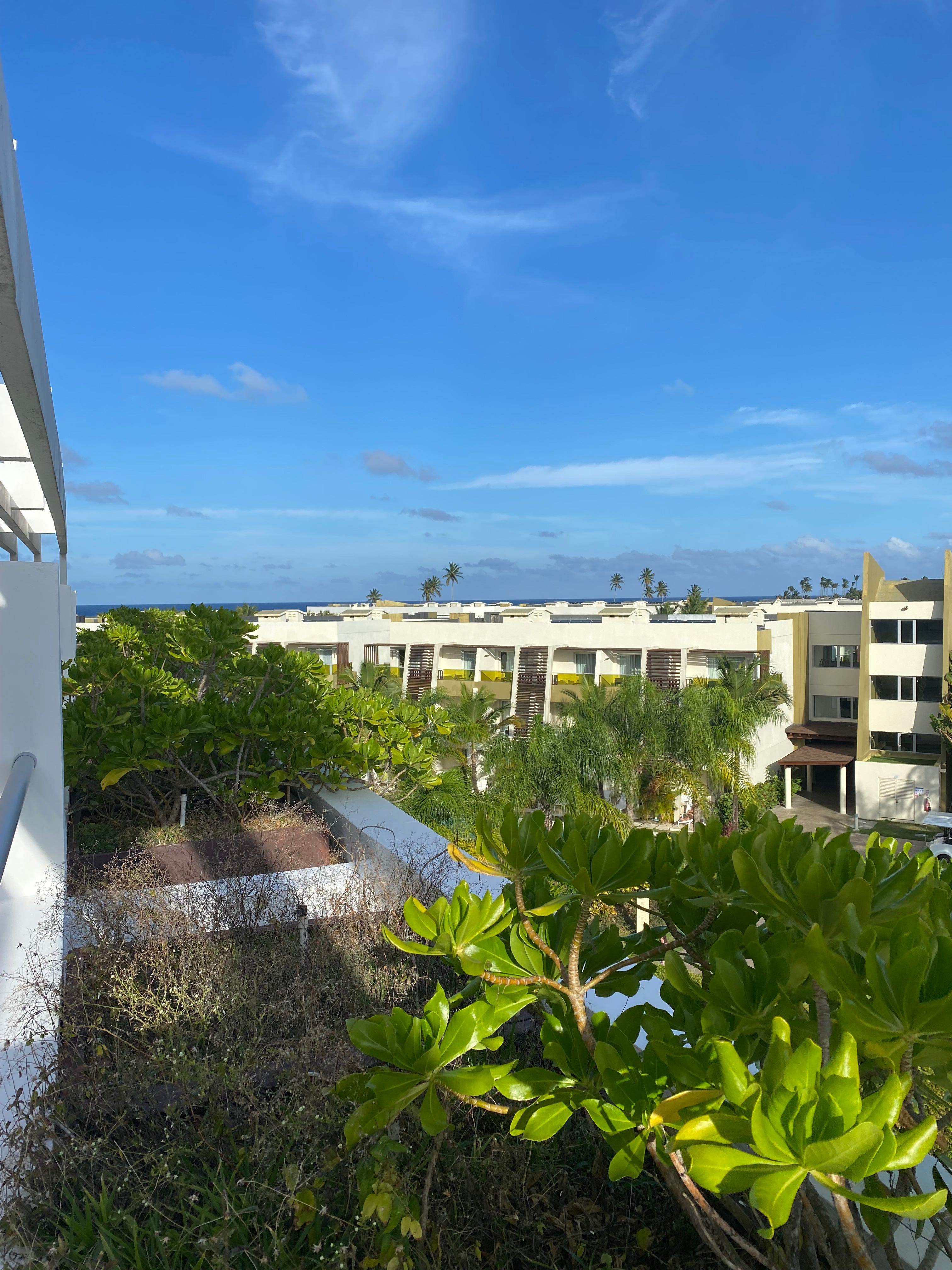
I chose a travel photograph that had some appealing elements but it was also lacking structure. We practiced reducing the image to its most essential shapes: a mapping of how the space inside the rectangle was initially organized. A large rectangle of sky at the top, building and vegetation in the middle, plants in the foreground and strong white architectural diagonals that connected the three levels of distance:
In simple terms, it looks like this:
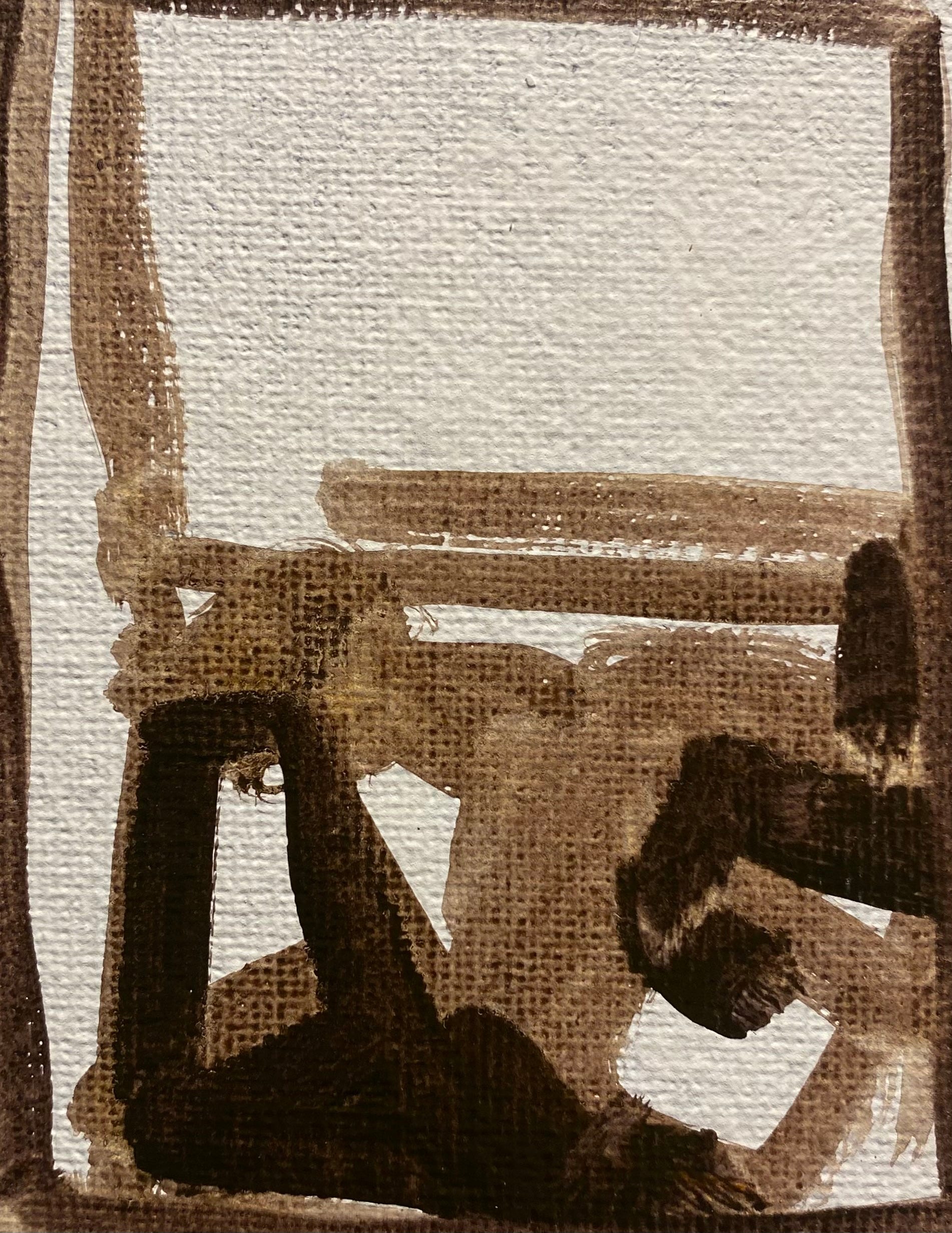
I already knew that there were a few things I wanted to adjust. The top of the horizontal building in the middle distance blocked the view of the sea, so I wanted to raise that horizon to have a good ribbon of blue. Everything in the foreground was also boxed below that initial horizon and I wanted to have the plants bigger and above the horizon. These decisions create more overlap and therefore, more of an illusion of depth.
After adjustments and the initial colour blocking stage where I painted out the white, my study looked like this:
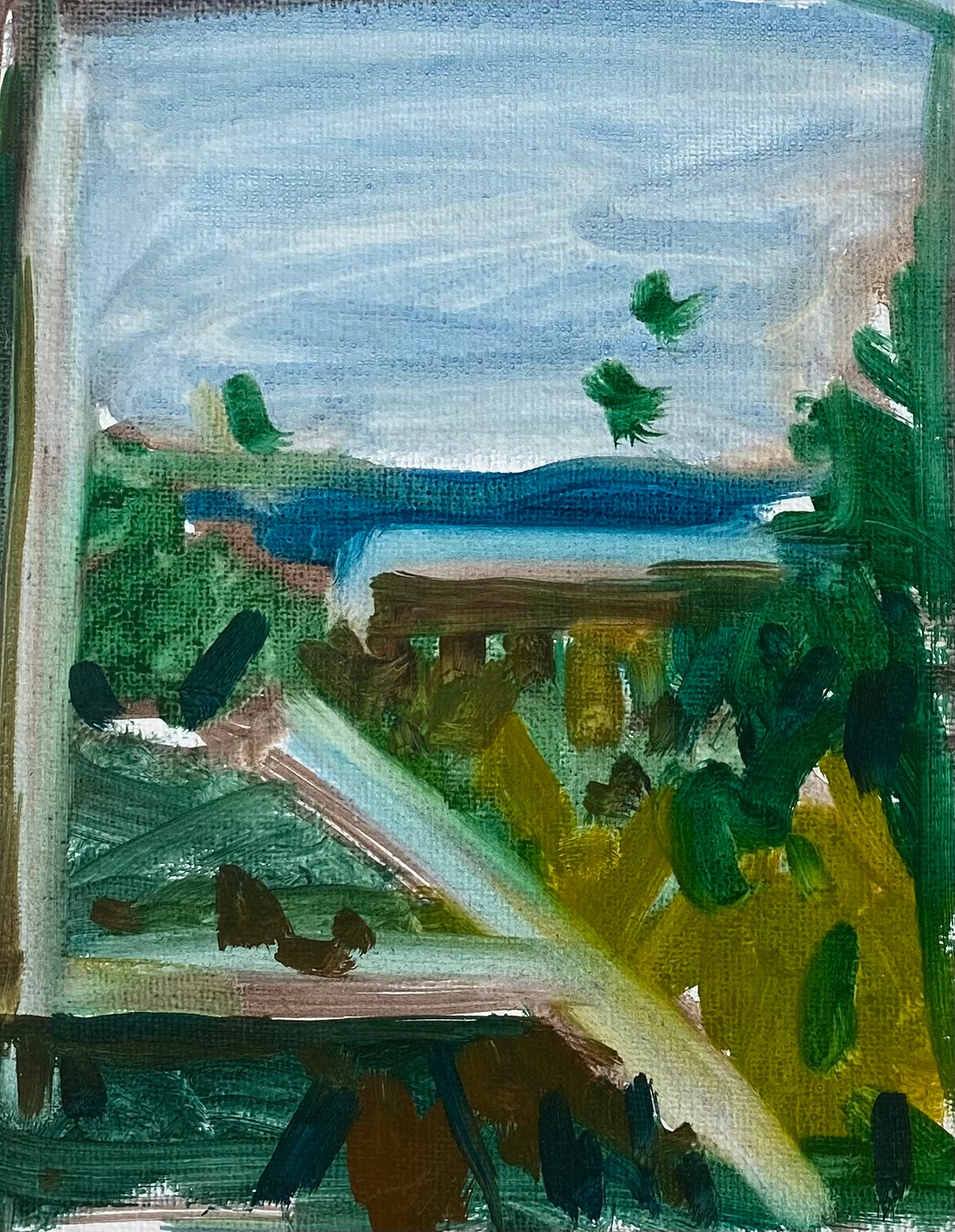
These large shapes are the structure of the painting.
Once they are established, the work becomes a process of refinement: revisiting the major relationships, adjusting colour, introducing variation, and gradually increasing specificity.
What matters is that the painting is now standing on something solid.
The details no longer need to carry the picture. The picture is already there.
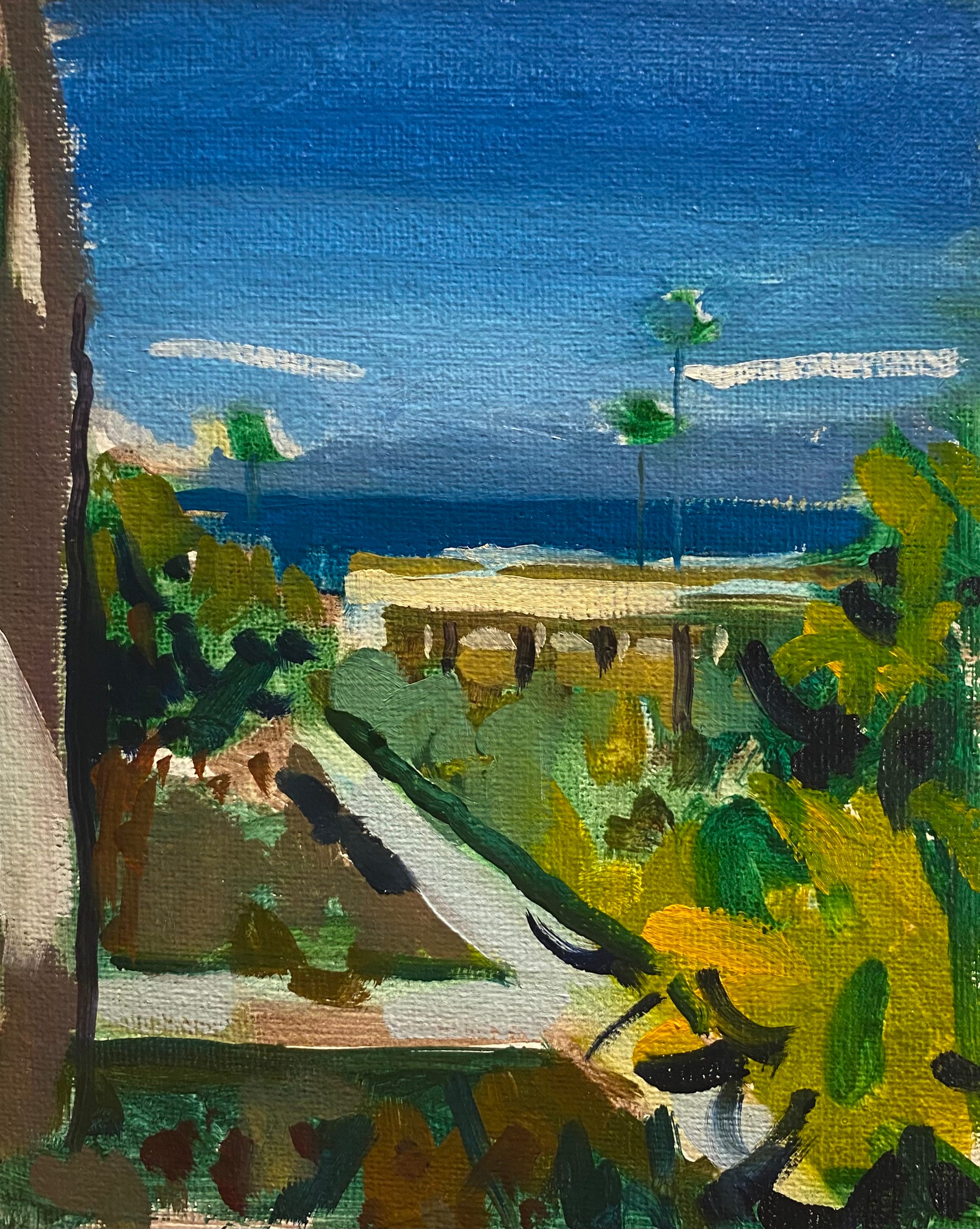
Of course, structure alone does not guarantee a compelling picture.
Once the large relationships are established, another set of questions emerges. Where does the eye enter? What deserves emphasis? What can be softened, removed, or left unsaid? How do different parts of the painting support one another, compete for attention, or create movement through the image?
These are questions of composition.
We often think of composition as a set of rules applied after the fact. In practice, composition begins much earlier. Every decision to enlarge a shape, shift an edge, simplify a passage, strengthen a contrast, or create an overlap is also a compositional decision. It is how we move from organizing a painting to directing the viewer’s experience of it.
The third session in this series will focus on these questions.
The Language of Composition
How Paintings Direct Attention
Sunday, July 26 · 2–5 pm
In this three-hour studio intensive, we will look at how painters guide the eye through an image using value, shape, colour, edge, rhythm, and hierarchy. Through demonstrations, analysis, and practical exercises, we will explore how a painting can become more than an accurate description of a subject and begin to function as a coherent visual statement.
As with previous sessions, the group will be limited to five painters in order to keep the discussion focused and rigorous.
Message me if you would like details.
THANK YOU for teaching! Saying that this is second of three classes could you show me the first class?
I would need to do to on the computer not in person.