
When Does Something Become Art?
Skill, beauty, and good pictures are not enough

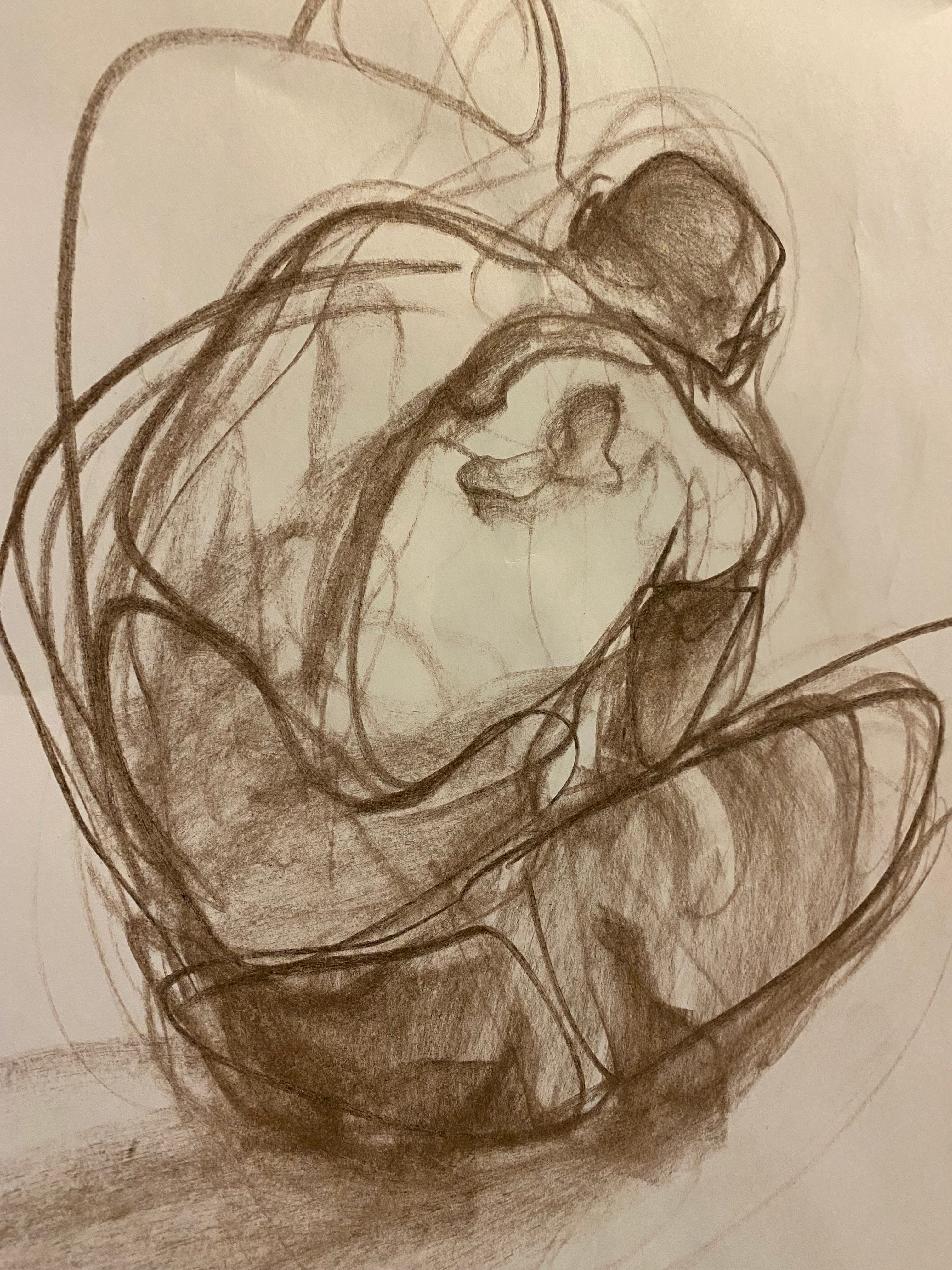
I have been thinking about this question for a long time because I think there are some misconceptions around what art is. Is art the thing that looks like art? What does art look like? Is art anything that was made using art materials? Is it art if it was made in art school? Is it art if it’s in an art gallery? Or an art fair?
The stuff that students make in art school is rarely art. It’s not supposed to be art. I have sat through so many critiques and I looked at countless drawings and paintings and illustrations. In many of these, students poured their hearts and effort. They think they’re making art and teachers look at it and talk about it as if it should be. The purpose of art school is to learn the materials, to experiment, to learn the canon, to get an idea about why we still talk about certain artists, and start to figure out how to transfer our ideas or imaginations into material form. If you’re a student, your only concern should be the quantity of stuff you make. Draw and paint as much as humanly possible and do not be concerned with its meaning or relevance in a larger cultural context. You need to absorb the materials and techniques to the point where you don’t even think about how to do it. You can do it in your sleep.
In some ways, calling it art is a burden to those who want to do it. And everything is called art nowadays. And we call things art too easily, out of inertia or because we don’t have any sub categories. Just make stuff that is fun to do. Get your hands dirty, make something out of nothing, do something surprising. If you call it art then you are all of a sudden held to some higher standard. Or you take yourself too seriously, believing that you do make ART. I think it’s important to have a more narrow definition of what art is, so that you can know what to look for and recognize it when you experience it, because real art is RARE.
A lot of religious imagery from before the 19th century functioned differently from what we now call art. Those works were inextricably tied to religious life and ritual, they had a practical and symbolic function. What we call art today generally does not have a practical use or purpose. But it does reach into a realm that was once occupied by religion: spirit, imagination, vision, dreaming, something beyond everyday reality.
I once saw a piece of installation art in Berlin and I wish I could remember the artist’s name to revisit it. It was in the basement of a gallery that was some former industrial facility, so it was all poured concrete and metal piping. A largely empty space in which the artist had placed strange objects that kind of looked like wasp nests growing from the ceiling. Very few things, three or five. In any case, it was mysterious but the most interesting thing was this: those things made the space feel more empty.
If you can put something in an empty space which makes the space feel more empty despite the fact that it has something extra in it, then that’s fucking art!
The first stage is to figure out how to work with a medium, how to understand and apply its properties, how to do more with less. Then how to apply this medium to convey something on the canvas. But to do this alone does not make it art. It is a skill like any other. Most of what you think is art remains at this stage. Abstract stuff or realistic stuff, figures, landscape, it’s all the same. Mediocre or competent, mostly colourful or identifiable with a movement of the past like Impressionism or Expressionism. It will often look beautiful or pretty or romantic. And many people consider beauty to be a prerequisite for art.
Next is the problem of how to make a good picture. What makes a compelling image? How does it tell a story or convey a feeling? This also does not make it art but it’s getting closer.
I found this quote from Francis Bacon that I really like and summarizes what I mean:
“The artist’s job is always to deepen the mystery.”
The first two stages are really about seeking answers to tangible problems: how to use the paint, how to mix colours, how to create contrast, how to do good proportions, how to leverage composition, how to direct the eye and so on. If the work stops here, then it may be beautiful and skillful and impressive and awesome. But it is still not art.
I don’t think that my work qualifies either. I think my work is skilled and sometimes surprising. And I try to do something authentic, but I cannot say that it’s art. I think this is why some artists prefer to refer to themselves as practitioners of their medium: sculptor or painter, rather than artist. I am comfortable, therefore, as a painter.
What do I consider to be art? Something that transcends its material coordinates and offers an experience which is more than the sum of its parts. Art doesn’t have a look because it is a response to our continually changing world. Art has always incorporated new technologies and evolved in tandem with new world views and ideas about culture and society.
Art is not a skill or a style. It is something beyond both those things. An artwork can be cutting edge or ancient and, in either case, it is also outside of time. It will say something about being human that would be relevant in any time period.
I am not going to give you examples because this is all too subjective. Why don’t you tell me what you think art is? Give me some examples and I’ll tell you what I think. Let’s have a dialogue or even an argument about this!
I think Art is a unique way of seeing that alters our perception, interrupts our habits, and repositions how we experience the world
I generally don’t think that the “what is art?” discussion gets us anywhere. It’s like politics these days, in that 99% of people are firmly on one side of it or the other. As a longtime teacher and lifelong student I generally try to give my own students some kind of response when they invariably ask.
My response is usually something along the lines of: “An artist searches for a question to ask about something that is of importance to them and then attempts to make a piece that holds an answer to that question”
Going back at least 70,000 years, art was just storytelling of some kind that was made as a “Gift to the Culture” and shared by all. It started to be commodified around 600 years ago and was basically a trade until late in the 19th century, when a new Middle Class appeared with Modern Art and Art for Art’s Sake evolving out of that.
My mentor Wayne Thiebaud told me that when he was around other artists (Diebenkorn, de Kooning, Stella, Kline, and so on, they never talked about it. It was just accepted that art was what they did every day. Like a job. That’s my take on it as well. Kind of boring I guess, but there it is…